
2026-08-16 · Mike Thompson
What to Expect When Dealing with Spring Snow Melt Flooding in Spokane
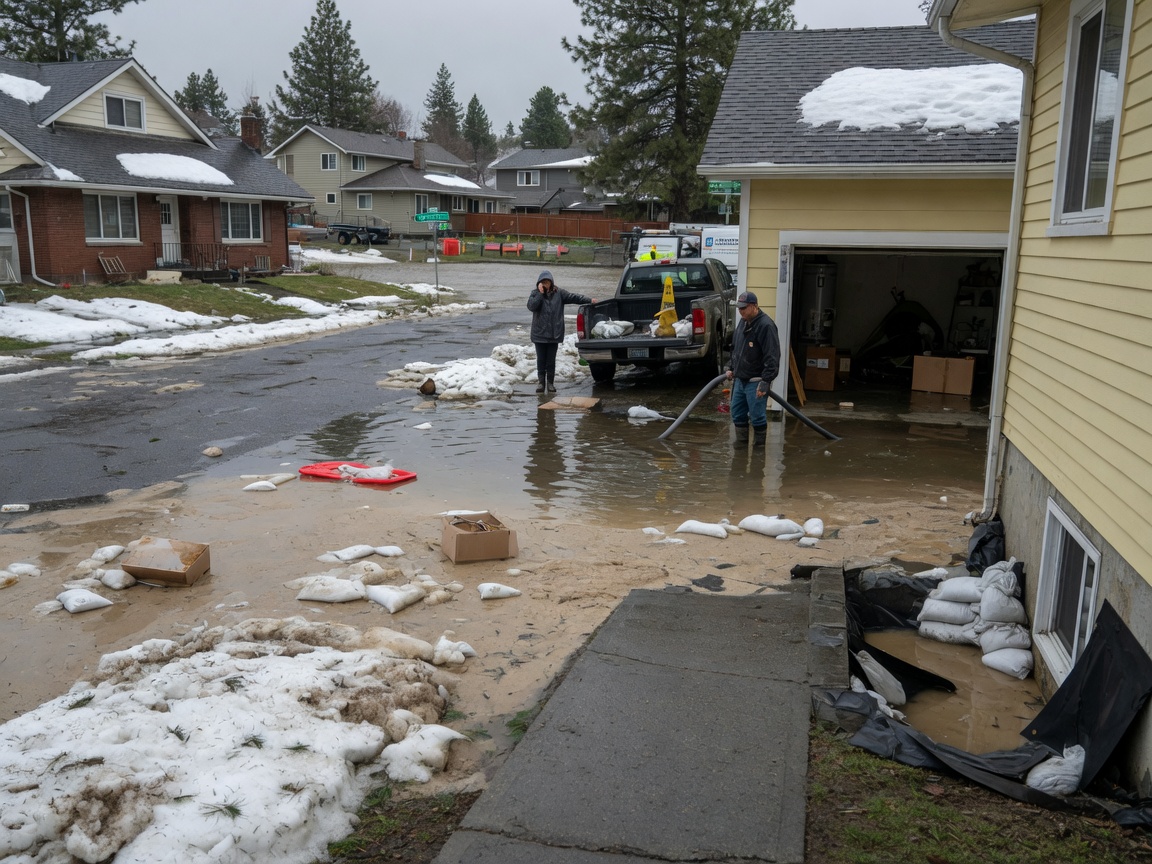
Spring snow melt flooding in Spokane typically causes basement water intrusion within 3–7 days of rapid thaw, with standing water reaching 6–18 inches in low-lying areas and requiring extraction within 24–48 hours to avoid mold growth.
How Snow Melt Flooding Develops in the Spokane Area
Rapid temperature swings in March and April turn accumulated winter snow into runoff that overwhelms drainage around foundations. Spokane's clay-heavy soils slow water absorption, directing excess moisture toward basements and crawl spaces in neighborhoods from Five Mile Prairie to Liberty Lake. Homeowners often notice seepage along walls first, followed by pooled water near sump pits. This pattern repeats yearly because frozen ground prevents natural infiltration until it thaws from the top down. Properties on slopes or near the Spokane River see higher volumes, while flat lots collect water that sits against concrete for days. Understanding this sequence helps residents time their response before damage spreads to flooring and lower drywall.
Immediate Steps After Discovering Meltwater
Shut off power to affected areas if water reaches outlets, then document conditions with photos before moving items. Remove standing water using a wet vac or pump rated for at least 5 gallons per minute to reduce saturation quickly. Open windows on dry days to promote airflow while avoiding humidity spikes above 60 percent. Contact a restoration team for moisture mapping within the first day, because hidden pockets behind baseboards can reach 20–30 percent moisture content and foster mold in under 72 hours. Avoid using household fans alone on wet carpet, as they can spread spores. Focus first on extraction rather than drying, since trapped water under flooring doubles the time needed for complete structural drying.
The Water Damage Restoration Process
Professionals begin with emergency flood assessment using infrared cameras to locate moisture behind walls and under slabs. They extract remaining water, then set up commercial air movers and dehumidifiers sized for the square footage involved. In Spokane homes, this phase usually lasts 3–5 days for Category 1 water and 5–8 days when groundwater carries sediment. Technicians monitor readings daily until materials return to 10–12 percent moisture. When drywall or insulation absorbs meltwater, selective demolition removes the lower 12–24 inches to prevent hidden mold. Homeowners can review typical project ranges in the article Typical Costs for Water Damage Restoration in Spokane Homes. Final steps include antimicrobial application and resetting any affected electrical components.
Preventing Recurring Issues from Future Thaws
Grade soil away from the foundation at a 6-inch drop over 10 feet and extend downspouts at least 5 feet from walls. Install or upgrade sump pumps with battery backups rated for 2,000 gallons per hour. Seal exterior foundation cracks larger than 1/8 inch before winter freeze. In Spokane's clay soil conditions, many basements benefit from French drains tied to a reliable sump system. Review the guide How to Spot and Fix Basement Leaks Common in Spokane's Clay Soil for targeted fixes. Schedule a preventive water damage assessment each fall to identify weak points before the next melt cycle. These steps reduce repeat flooding events by addressing the root drainage problems rather than treating symptoms annually.